Guide · 3 November 2026
Pathani jubba guide: what it is and how to style it
The Pathani jubba takes its inspiration from the Pathani suit, the traditional dress associated with the Pashtun people of Afghanistan and north-west Pakistan, and long worn across India too. It is a strong, masculine look that has become a festive favourite. Here is what defines it and how to wear it. (ZARIYA does not sell Pathani suits or jubbas; our waistcoats, topis and accessories pair well with them.)
What is a Pathani suit?
A traditional Pathani suit has two parts: a long kameez (shirt), usually reaching the knee or below, and a loose shalwar (trousers) gathered at the ankle. The kameez typically has a shirt collar, a front placket with buttons, chest or side pockets, and rounded or straight hems with side slits.
What makes a jubba “Pathani”?
A Pathani-style jubba borrows the details of the Pathani kameez:
- Shirt collar rather than a band or collarless neckline.
- Front placket with visible buttons, often half-length.
- Pockets: chest pockets and side pockets are common.
- Roomier fit through the body, with a straight cut.
- Length: from knee length to longer, jubba-style lengths.
- Cuffs: shirt-style cuffs with buttons.
Pathani jubba vs Arab jubba
- Arab (Gulf) jubba: one full-length piece, often worn alone, minimal detailing.
- Pathani style: shirt-like details, usually worn with shalwar, more rugged and structured.
For other styles, see Pakistani vs Emirati jubba and jubba vs kurta vs bisht.
Fabrics and colours
Pathani suits are often made in sturdier fabrics with a matte finish. Earthy colours look especially good: olive, brown, grey, charcoal, navy, beige and black, as well as white for Eid. Cotton and cotton blends suit summer; heavier weaves suit winter.
How to style a Pathani jubba
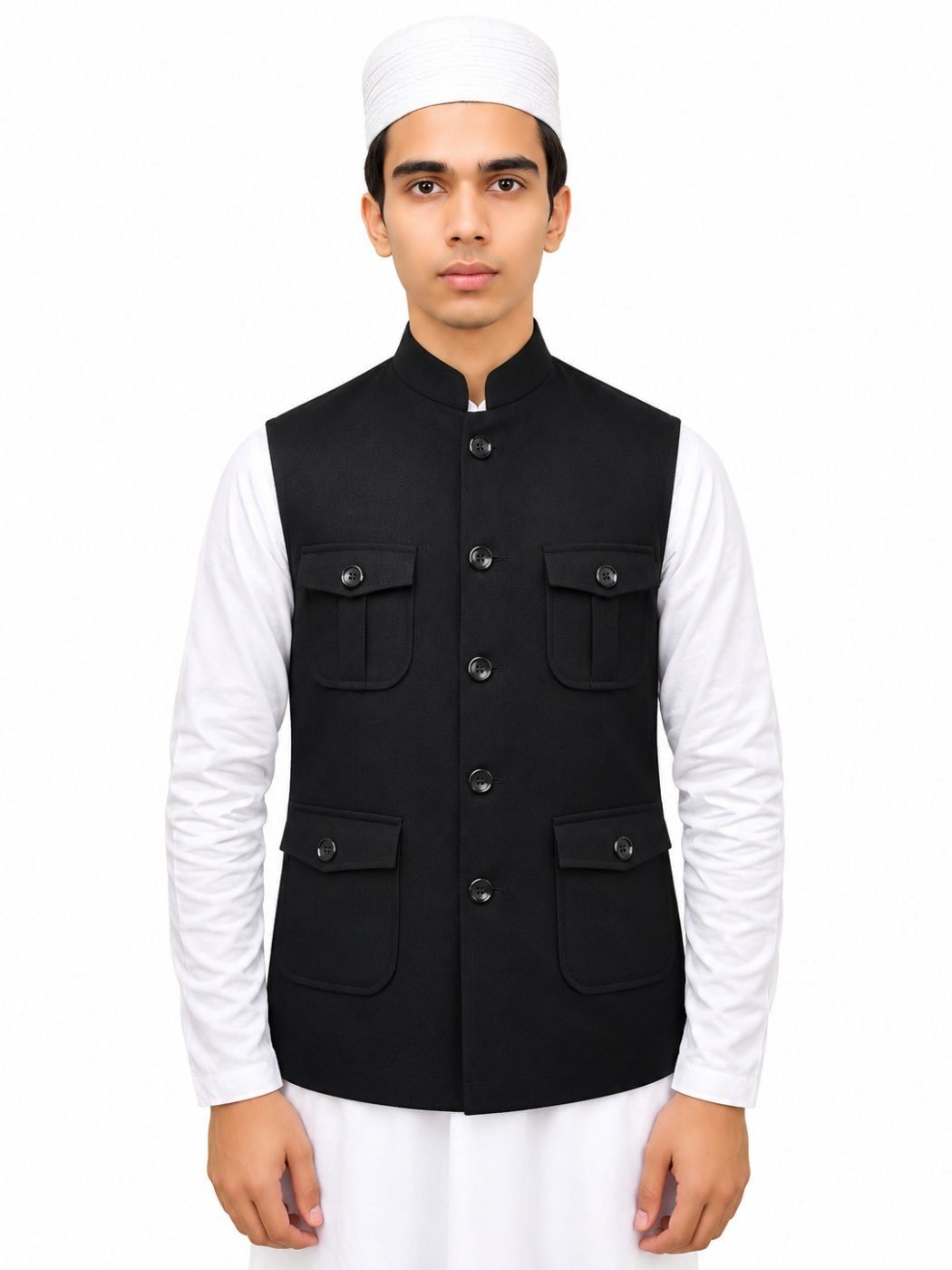
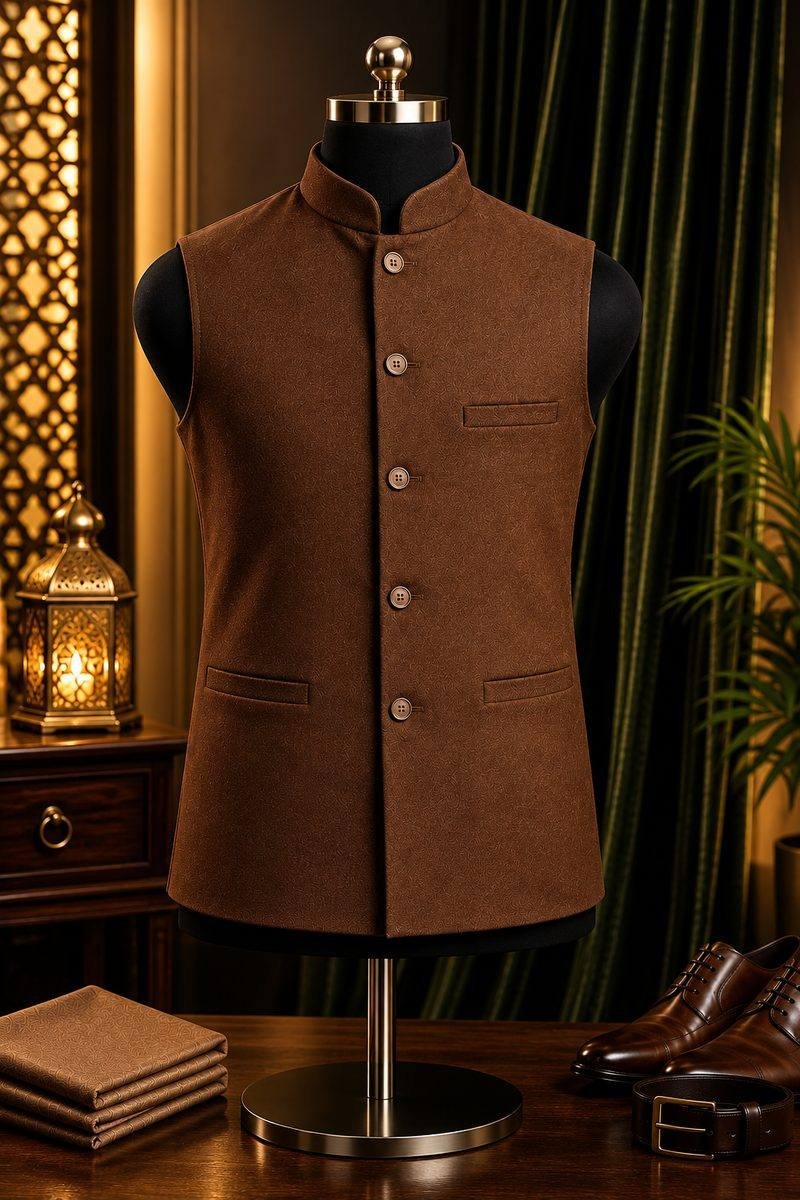
- With a waistcoat: the classic pairing. Try a black waistcoat over grey or beige, a chocolate brown waistcoat over cream, or a rust waistcoat over olive. See all waistcoats.
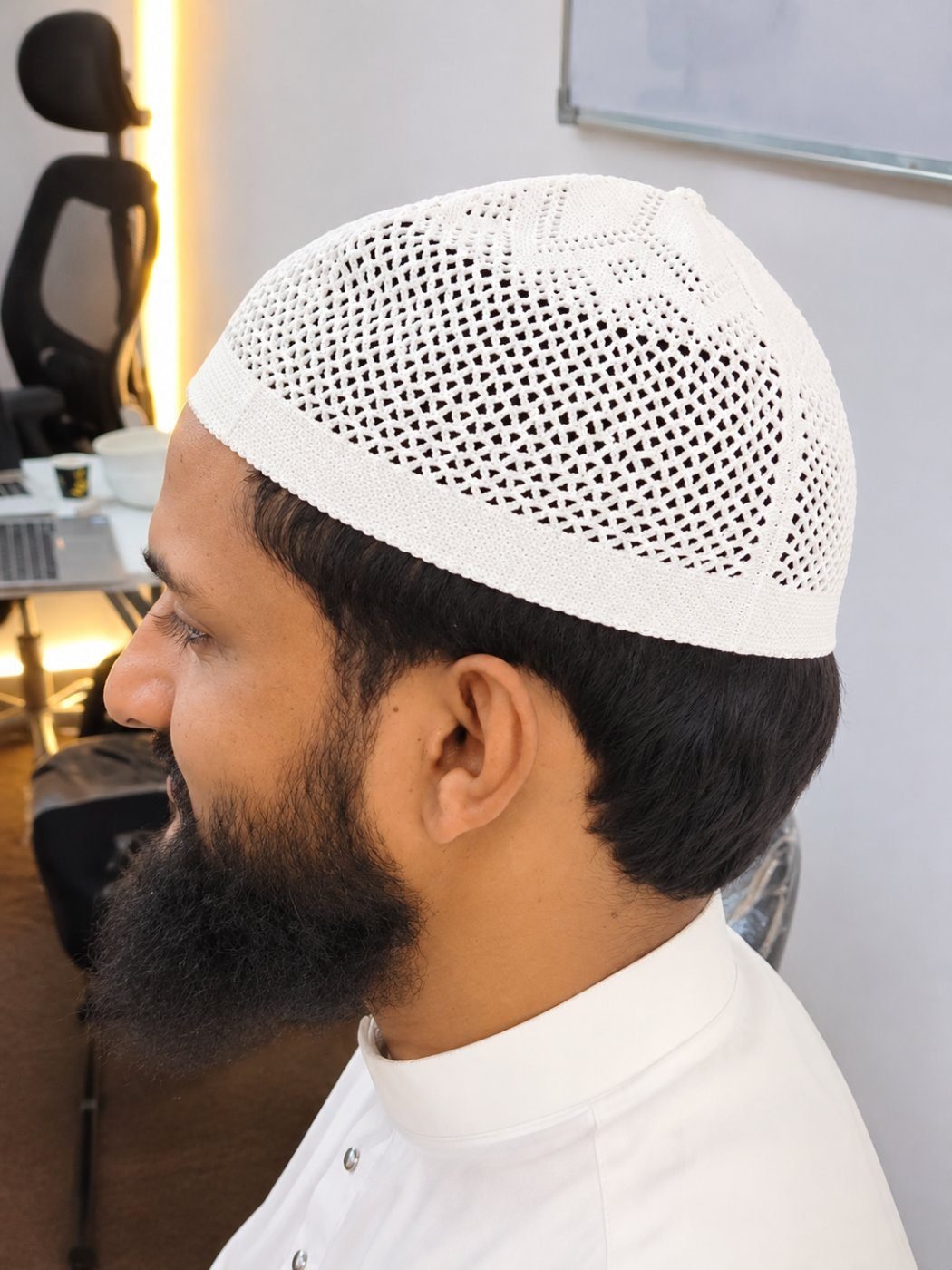
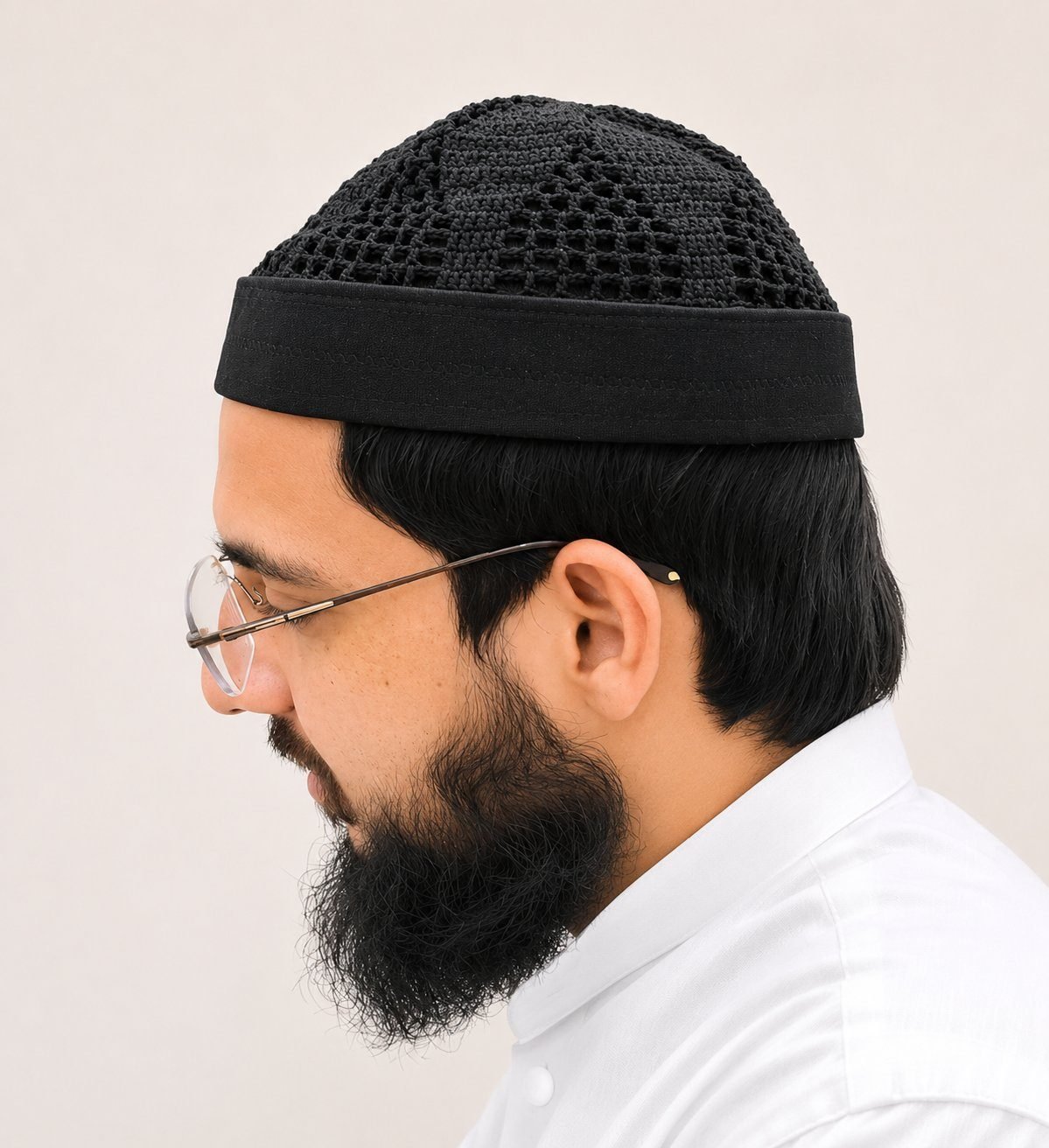
- Head covering: a topi keeps it traditional.
- Footwear: Peshawari chappals are the traditional match; leather sandals or loafers work too, with leather socks in cooler weather.
- Accessories: a leather watch, a wooden tasbih and a touch of oud attar.
Fit tips
- The shoulder seam should sit at the shoulder edge; the body should be roomy but not baggy.
- Sleeves should reach the wrist with cuffs buttoned.
- If wearing a waistcoat, the kameez should be long enough to show well below it.
Pathani style for different occasions
- Everyday: a cotton Pathani kameez and shalwar in grey or beige, with sandals. Comfortable and hard-wearing.
- Jumu‘ah: a white or cream Pathani-style jubba, a topi and a little attar.
- Eid: a fresh Pathani suit with a contrasting waistcoat, such as black over white or rust over olive.
- Weddings: a well-pressed suit in a rich colour, a structured waistcoat, polished chappals and a deep oud attar.
- Winter: heavier fabric, darker colours and a shawl or jacket on top.
Shalwar and length
The shalwar is cut very loose with a gathered waist, either with a drawstring or elastic, and narrows at the ankle. It should sit comfortably at the waist and fall just above the ankle so it does not drag. The kameez usually falls to the knee or a little below. A longer kameez gives a more jubba-like, formal look.
Why the Pathani cut is so popular
The Pathani suit combines comfort with structure. The loose shalwar allows easy movement and sitting on the floor, the shirt collar and placket look smart, and the pockets are practical. It suits many body types, and it pairs easily with a waistcoat for occasions.
Common questions
Can I wear a Pathani kameez without the shalwar?
Yes. Many men wear it with straight trousers or jeans for a more casual look.
Is the Pathani style suitable for the masjid?
Yes. The loose shalwar and roomy kameez make it very comfortable for prayer.
What colours are most traditional?
Earthy tones such as brown, grey, olive and white are the most classic choices.
Choose a fabric that suits the season, get the fit right in the shoulders and length, and the Pathani style will serve you well from everyday wear through to Eid and weddings.
Care
Wash in cool water, dry in the shade and iron while slightly damp for a crisp collar and placket.
For a complete festive look, read the Eid outfit guide for men.