Guide · 3 November 2026
Jubba designs explained: collars, cuts, embroidery and colours
Search for a jubba design and you will find hundreds of variations. Most of them come down to a few design choices: the collar, the front opening, the cut, the decoration and the colour. Once you know these, it is easy to pick a jubba that suits your style and the occasion. (ZARIYA does not sell jubbas; this guide is to help you choose and to plan the layers that go on top.)
Collar designs
- Shirt collar: a pointed collar like a formal shirt. Associated with Saudi and Kuwaiti styles; very smart under a bisht.
- Band (mandarin) collar: a short stand-up collar. Clean and modern, common in Indian and Pakistani cuts.
- Collarless round neck: associated with the Emirati kandura, often finished with a long tassel (tarboosha).
- Omani style: collarless with a small tassel and neat embroidery around the neck.
Front openings
- Hidden placket: buttons concealed under a fabric strip for a minimal look.
- Visible buttons: classic, sometimes with decorative or contrast buttons.
- Zip front: practical for everyday wear.
- Pull-over with short opening: a short slit at the neck only; a very traditional cut.
Cuts and silhouettes
- Straight cut: falls straight from shoulder to hem; the most common.
- Slim or tailored cut: slightly closer at the chest and waist for a modern look, while staying modest.
- A-line: widening gently towards the hem, very comfortable for walking.
- Moroccan (jellaba-inspired): often with a hood and wider sleeves.
- Kurta-length: a shorter, knee-length jubba kurta worn with pyjama. See jubba vs kurta vs bisht.
Decoration
- Plain: elegant and versatile; the best base for a bisht.
- Tone-on-tone embroidery: subtle stitching on the collar, placket or cuffs.
- Contrast piping: a thin coloured edge along the placket and cuffs.
- Heavier embroidery: popular for weddings and Eid, especially in Pakistani designs.
Colours
White remains the classic (see the white jubba guide); black is striking for evenings (see black jubba styling); and grey, beige, navy, olive and brown are practical for daily wear and winter.
Which design for which occasion?
- Daily and work: plain, straight cut, band collar, neutral colour.
- Jumu‘ah: plain or subtly embroidered white or cream.
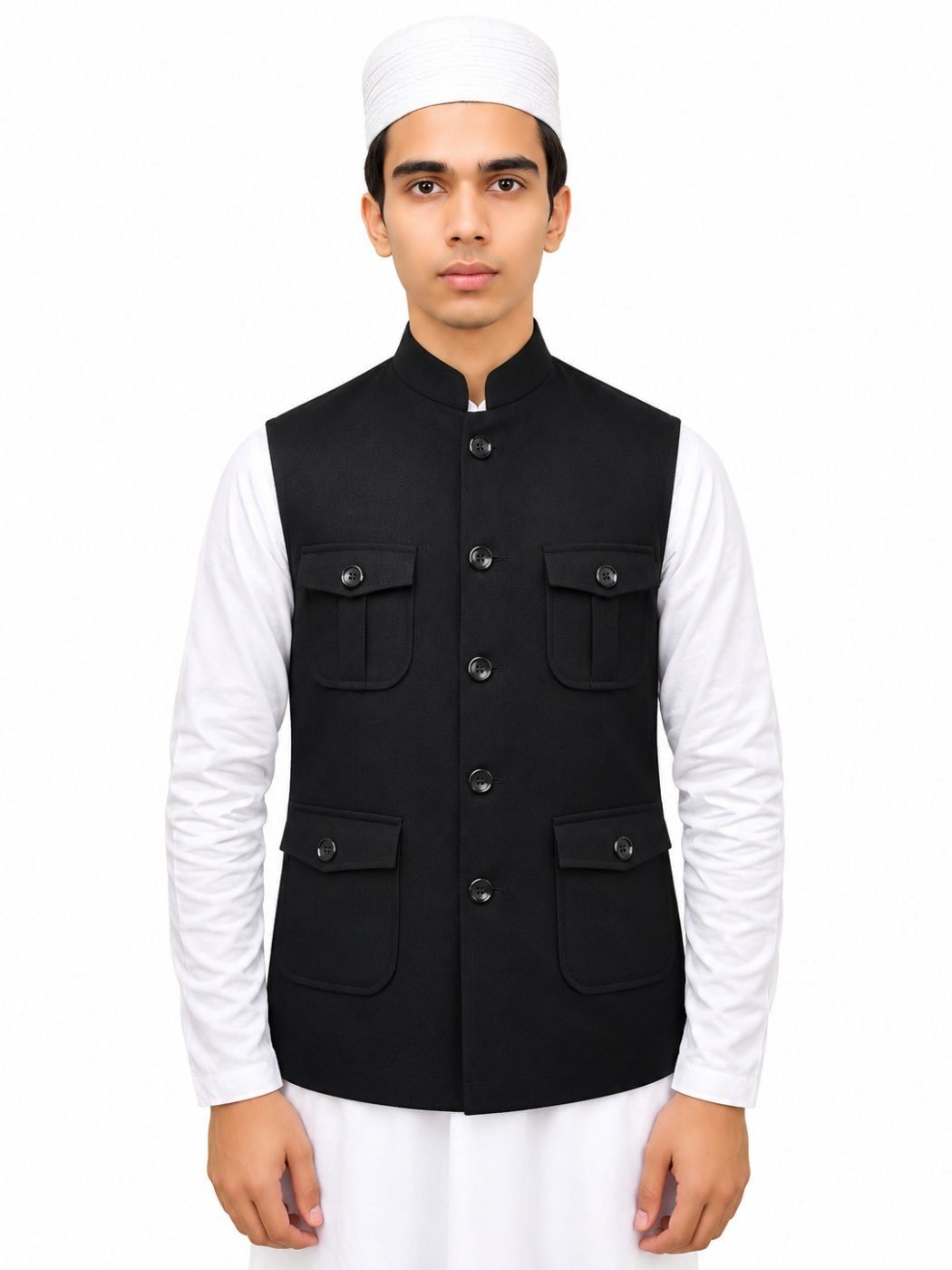
- Eid: fresh white or a soft colour with light embroidery, plus a waistcoat.
- Nikah and walima: crisp shirt-collar jubba under a Mishla (bisht).
Designs that work best under a bisht
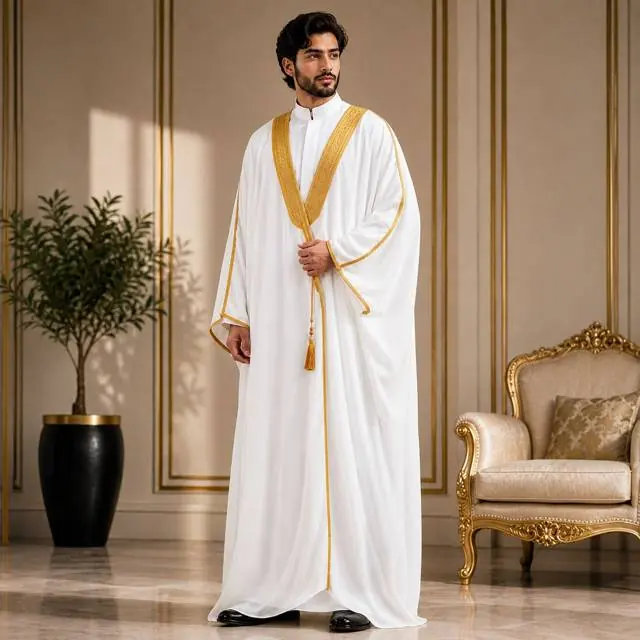
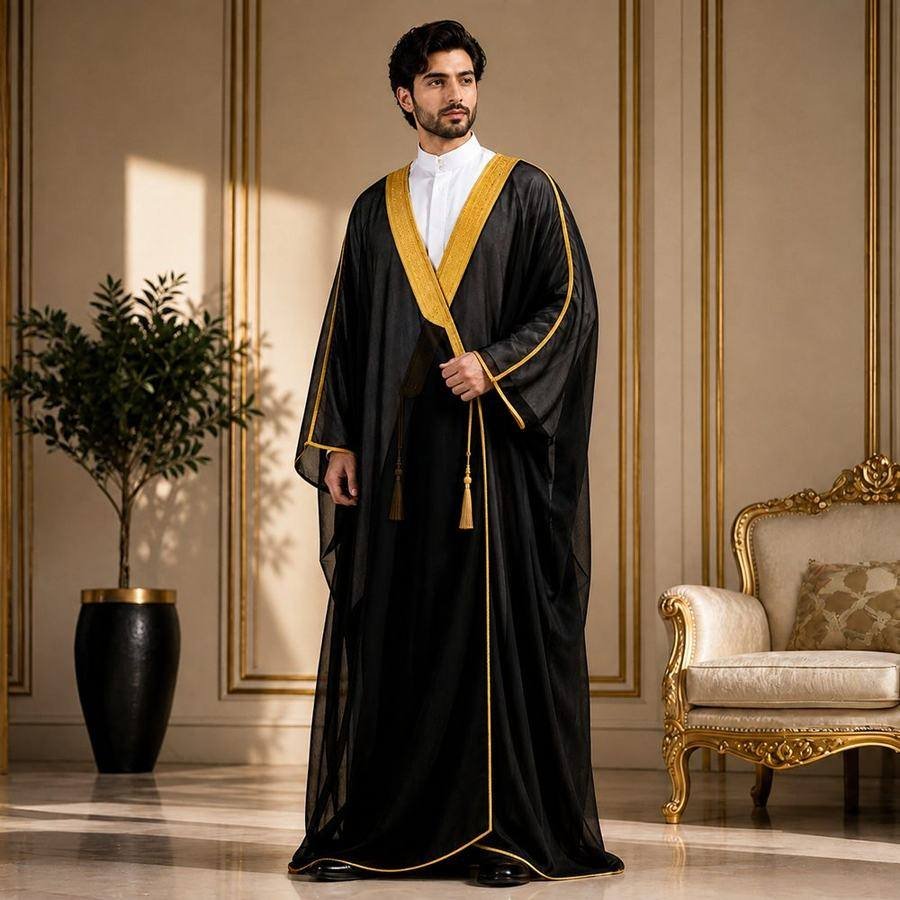
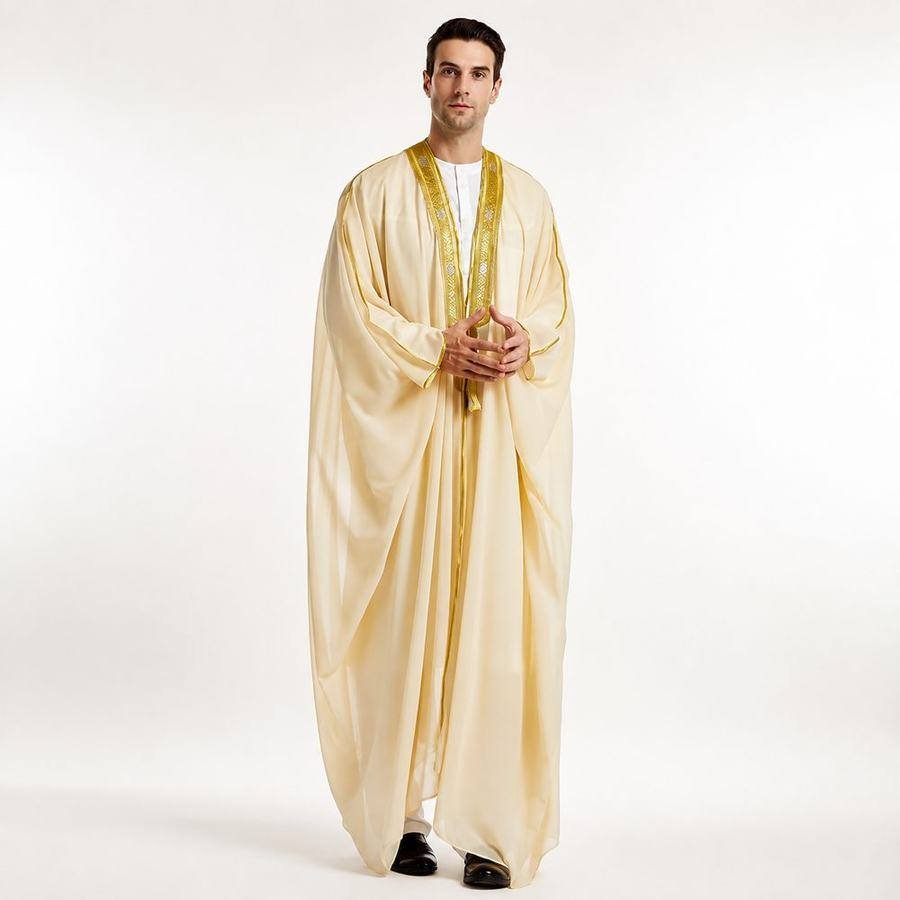
Because the bisht is the statement piece, the jubba underneath should be plain, well pressed and in a contrasting colour: white under black or cream, black under cream. Read our Mishla (bisht) guide for colours and sizes.
Pockets, cuffs and small details
Small details often decide whether a jubba is comfortable in everyday life.
- Side pockets: hidden in the side seams, they keep a phone, keys and a tasbih handy without spoiling the line.
- Chest pocket: handy for a pen or a miswak; common in Saudi and Pathani-inspired cuts.
- Cuffs: plain hems are easiest for wudu; button cuffs look smarter; cufflink cuffs are the most formal.
- Side slits: make walking and sitting on the floor easier, especially in longer cuts.
- Lining: partial lining across the shoulders helps the jubba keep its shape and reduces see-through in light colours.
Design and body shape
- Taller men carry full-length, straight cuts and long tassels well.
- Shorter men look taller in a single-colour jubba with a vertical placket and minimal horizontal detail.
- Broader men are flattered by straight or A-line cuts in matte fabrics, and darker colours.
- Slimmer men can wear slightly fuller cuts and lighter colours without looking lost in the fabric.
Design by season
In summer, lighter colours and breathable cotton are the most comfortable. In winter, many men switch to darker shades and heavier fabrics, layering a waistcoat on top for extra warmth.
Questions to ask before buying
- Where will I wear it most: daily, Jumu‘ah or occasions?
- Will I wear a bisht or waistcoat on top?
- Is the collar comfortable all day?
- Does the fabric suit the season?
- Is it easy to wash and iron?
Answering these first narrows hundreds of designs down to a handful that really suit you.
There is no single “best” jubba design. The right one is the design that fits well, suits the occasion and makes you comfortable through a long day of prayer and family visits.
Finishing touches
A topi or Rumaal, a little attar and a tasbih in the pocket complete any jubba design.