Guide · 3 November 2026
Eid outfit guide for men: putting together a complete look

Wearing your best clothes for Eid is a cherished tradition, and the day begins early with the Eid prayer, followed by visits to family and friends. A good Eid outfit is smart enough for the prayer, comfortable enough for a long day, and ready for plenty of photographs. Here is a simple way to build one.
Step 1: the base layer
Start with a well-fitted kurta pyjama or thobe. Plain, light colours such as white, cream, ivory and pale grey are classic for the morning prayer and work with almost any layer on top. Make sure it is freshly washed and ironed the night before.
Step 2: add a layer
This is what turns a plain kurta into an Eid outfit. You have two main choices:
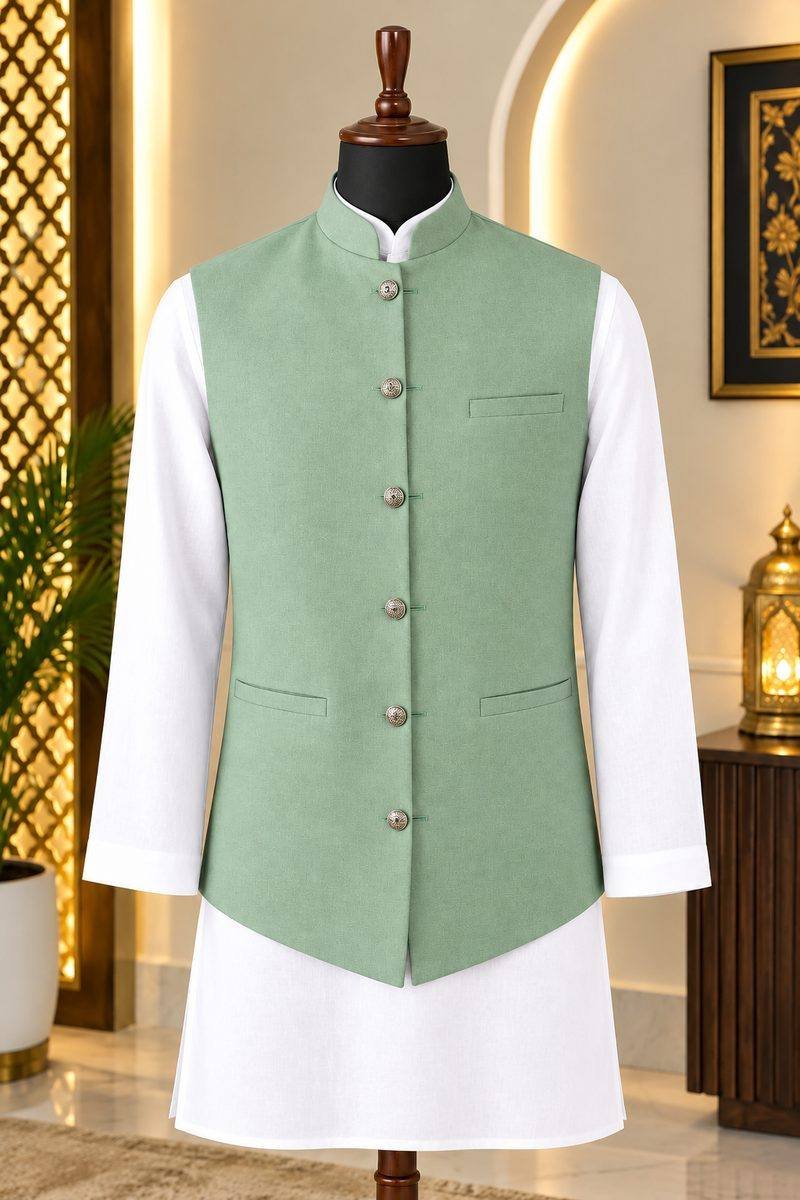
- Waistcoat (Nehru or bandhgala style): modern, neat and easy to wear all day. Colours like teal, maroon, sage green and mustard look festive against a white or cream kurta. See all colours in the waistcoat collection.
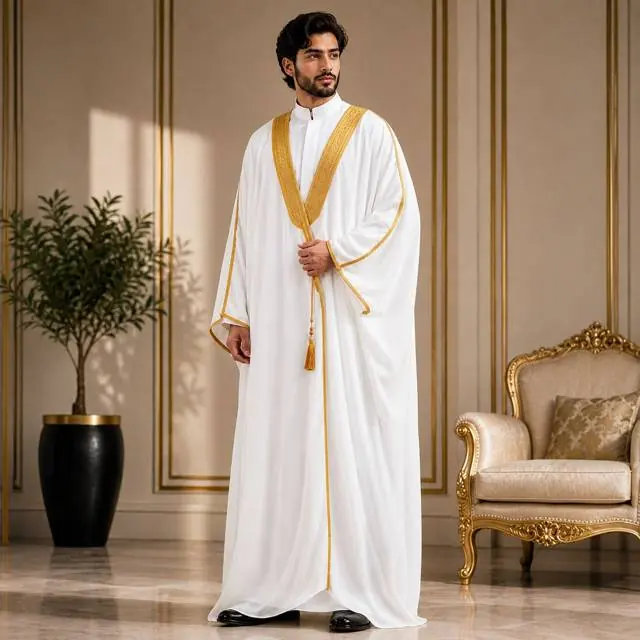
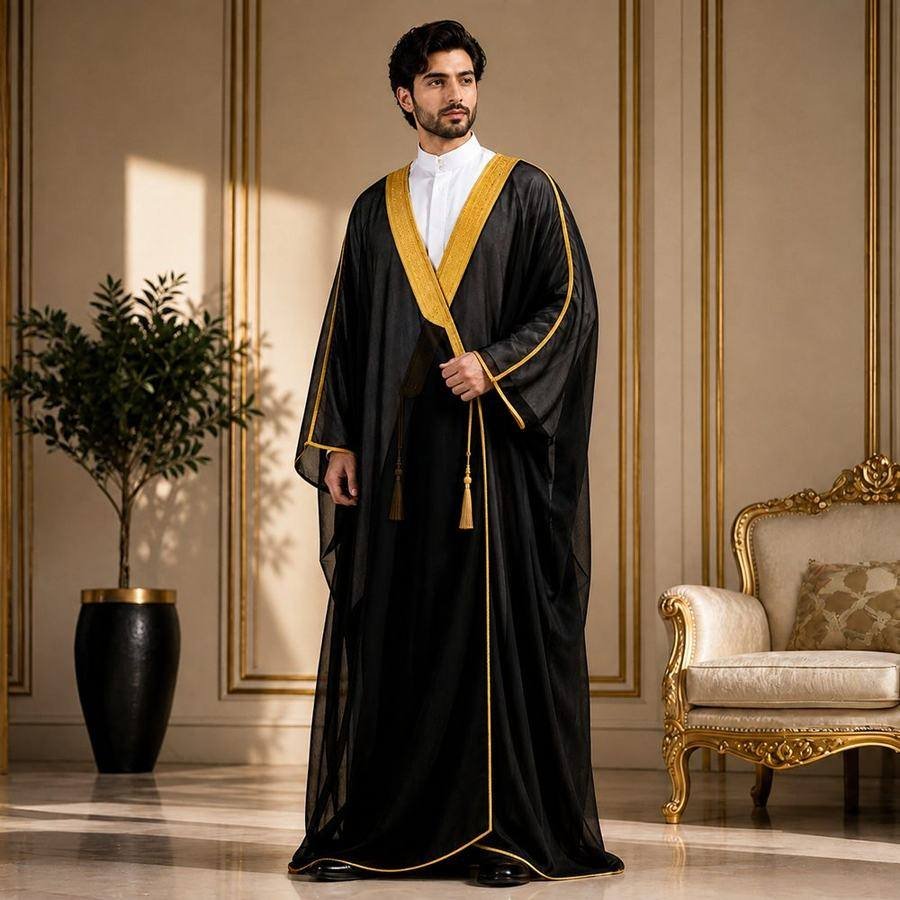
- Mishla (bisht): the most formal option, ideal if you are hosting, leading the family or attending a nikah over Eid. A black Mishla over a white thobe is a timeless combination. Read our Mishla buying guide.
Step 3: colour combinations that work
- White kurta + teal or sage waistcoat: fresh and youthful.
- Cream kurta + maroon or rust waistcoat: warm and rich, great for photographs.
- Pale grey kurta + black waistcoat: understated and sharp.
- White thobe + black Mishla: classic and formal.
For families who like coordinated photos, choose one waistcoat colour for the men and let each person keep their own kurta colour.
Step 4: head covering
A clean topi completes the look for the Eid prayer. For a formal Gulf-style outfit with a Mishla, add a white or check Rumaal. See how to tie a Rumaal.
Step 5: footwear
Since you will be taking your shoes off at the masjid and at homes, choose footwear that slips on and off easily, such as mojaris, sandals or loafers. Leather socks are a practical, neat option for long days.
Step 6: the finishing touch
- A little attar before leaving for the prayer. Read our attar guide.
- A tasbih in your pocket for the takbeer on the way to the Eidgah.
- Freshly cleaned teeth; many people use a miswak.
Three complete looks
The classic
A crisp white kurta or jubba, a maroon waistcoat, a white topi and brown sandals. Simple, traditional and right for Eid salah and family visits.
The Gulf look
A full-length white jubba, a red and white Rumaal, a light oud attar and leather sandals. Add a black Mishla if you are attending a nikah or a formal Eid gathering.
The modern neutral
A grey or beige kurta, a cream waistcoat or sage green waistcoat, and tan loafers. Calm, contemporary and easy to wear all day.
Eid ul-Fitr vs Eid ul-Adha
For Eid ul-Fitr, many families plan new clothes weeks ahead, and the day is mostly about prayer, visits and food. For Eid ul-Adha, many men are involved in the qurbani, so it helps to have a practical outfit for the morning and change into your best clothes afterwards. Darker colours or an older kurta work well for that part of the day.
A checklist for Eid morning
- Clothes ironed and laid out the night before.
- Ghusl, then attar applied to the skin, not the collar.
- Topi or Rumaal ready and pressed.
- Clean socks; leather socks are easy at the masjid.
- A miswak in your pocket.
- Cash ready for Eid gifts and charity.
Budget-friendly tips
A new Eid outfit does not have to mean buying everything new. A freshly washed and well-pressed white kurta looks new again with a different waistcoat or a new topi. Investing in one quality waistcoat or a Mishla gives you a festive layer you can reuse every year, while the pieces underneath change. Buying a little before the Ramadan rush also avoids last-minute delivery worries.
Above all, keep the outfit clean, comfortable and modest. These are what make an Eid outfit feel special, more than any particular colour or label.
Plan ahead
Online orders get busy in the last days before Eid, so order your waistcoat or Mishla a couple of weeks early, try it on as soon as it arrives, and leave time for any exchange.