Guide · 3 November 2026
Jubba for men: how to choose the right fit, fabric and length
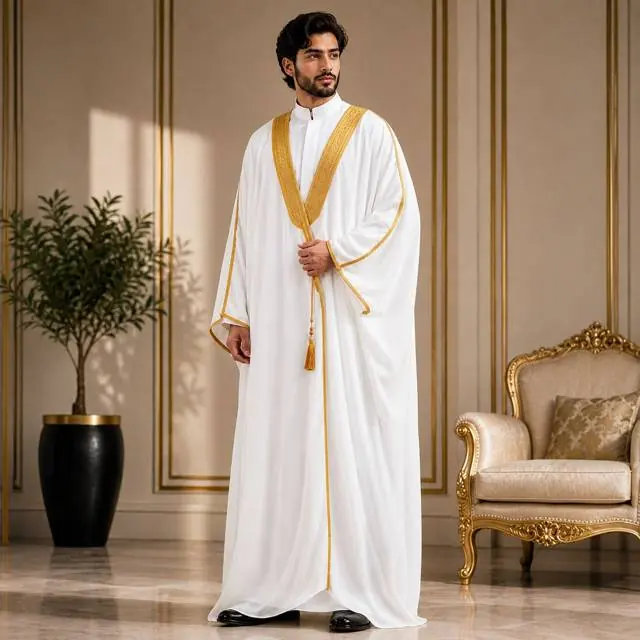
The jubba (also called a thobe, thawb or dishdasha) is a long robe worn by Muslim men around the world. In India it has become a favourite for Jumu‘ah, Ramadan and Eid, and many men now wear one for weddings too. A well-chosen jubba looks dignified and is wonderfully comfortable. Here is what to check before you buy. (ZARIYA does not sell jubbas; we make the layers and accessories that go with them, and this guide is here to help you choose well wherever you buy.)
1. Fit across the shoulders and chest
A jubba should be loose and straight, but not shapeless. The shoulder seam should sit at, or just past, the edge of your shoulder. You should be able to raise your arms, bow and prostrate comfortably without the fabric pulling across the chest or back. If it pulls in sujood, it is too tight.
2. Length
Most men prefer the hem to fall at or just above the ankle. This keeps it clear of the ground when walking and at the masjid. Measure from the top of the shoulder to where you want the hem, standing straight in your usual footwear, and compare with the size chart.
3. Sleeves and cuffs
- Plain sleeves are simple and easy for wudu.
- Cuffed sleeves with buttons or cufflinks look more formal.
- Sleeves should reach the wrist bone with the arm relaxed.
4. Collar styles
- Band or mandarin collar: neat and modern; popular in Indian and Pakistani cuts.
- Shirt collar: a Saudi-style look, smart with a bisht.
- Collarless (round neck): the Emirati kandura style, often with a tassel.
For more on regional styles, read Pakistani vs Emirati jubba.
5. Fabric for Indian weather
- Cotton and cotton blends: breathable and comfortable in summer.
- Polyester blends: crease-resistant and easy to wash; can feel warm in heat.
- Heavier weaves: warmer for winter in North India.
Check that light colours, especially white, are not see-through in sunlight.
6. Colour
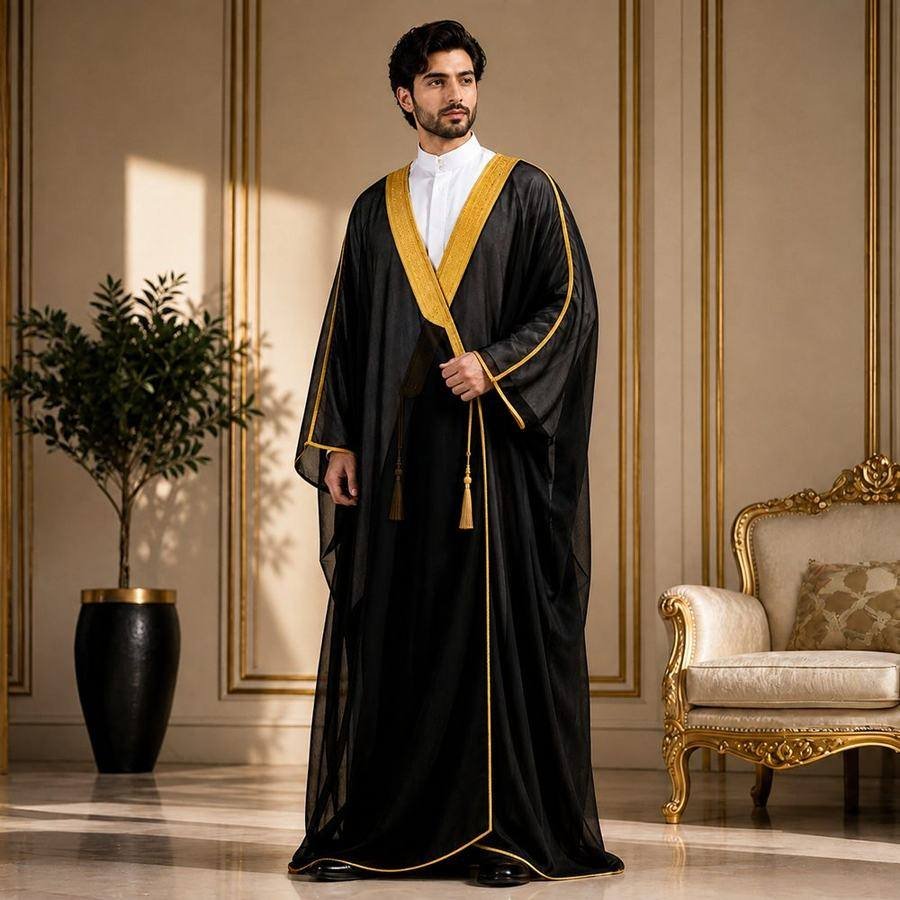
White is the classic choice (see our white jubba guide), black looks sharp for evenings (see black jubba styling), and soft shades like grey, beige, olive and navy are practical for daily wear.
7. What to wear with a jubba
- A Mishla (bisht) on top for nikah, walima and Eid: try the black Mishla over a white jubba.
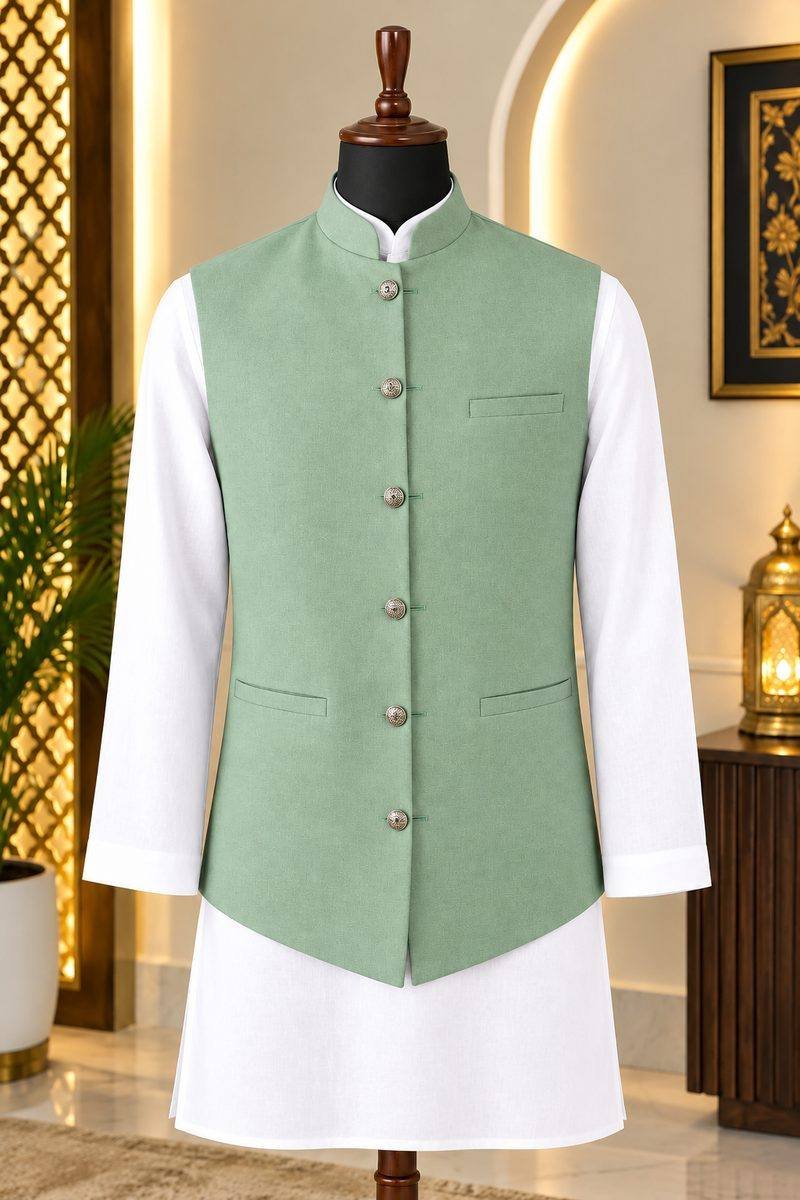
- A waistcoat for a festive but relaxed look: see colours.
- A topi or Rumaal on the head: topi, Rumaal.
- Attar before leaving for prayer: attar collection.
- Socks and easy footwear: leather socks and slip-on sandals.
How to measure yourself
Size charts vary between brands, so measure once and compare every time you buy.
- Chest: measure around the fullest part of the chest, under the arms, keeping the tape level. Add room for a loose fit; most jubbas are cut with plenty of ease.
- Shoulder: measure across the back from one shoulder edge to the other.
- Length: from the highest point of the shoulder, next to the neck, down to where you want the hem, usually just above the ankle bone.
- Sleeve: from the shoulder edge to the wrist bone, with the arm relaxed.
If you fall between two sizes, choose the larger for comfort in prayer, and have the length adjusted if needed. A good tailor can shorten a jubba neatly.
Signs of a well-made jubba
- Straight, even stitching, with no loose threads at the hem and cuffs.
- A collar that sits flat and keeps its shape after washing.
- Buttons sewn on firmly, with buttonholes neatly finished.
- Pockets that lie flat and are deep enough for a phone or wallet.
- Side panels or gussets under the arms, which allow easier movement.
How many jubbas do you need?
For most men, two or three is plenty: a white jubba for Jumu‘ah and Eid, a darker or neutral jubba for everyday wear, and perhaps a winter jubba in a heavier fabric. Rotating between them keeps each one looking fresh for longer.
Take the time to measure and check the fabric, and a good jubba will serve you for many Jumu‘ahs and Eids.
8. Care
Wash in cool water and dry in the shade; iron while slightly damp for crisp lines. Wash white jubbas separately to keep them bright.
Want to understand how a jubba compares with other traditional wear? Read jubba vs kurta vs bisht and jubba designs explained.