گائیڈ · 3 نومبر 2026
مسواک گائیڈ: یہ کیا ہے، کیسے استعمال کریں اور اس کی دیکھ بھال
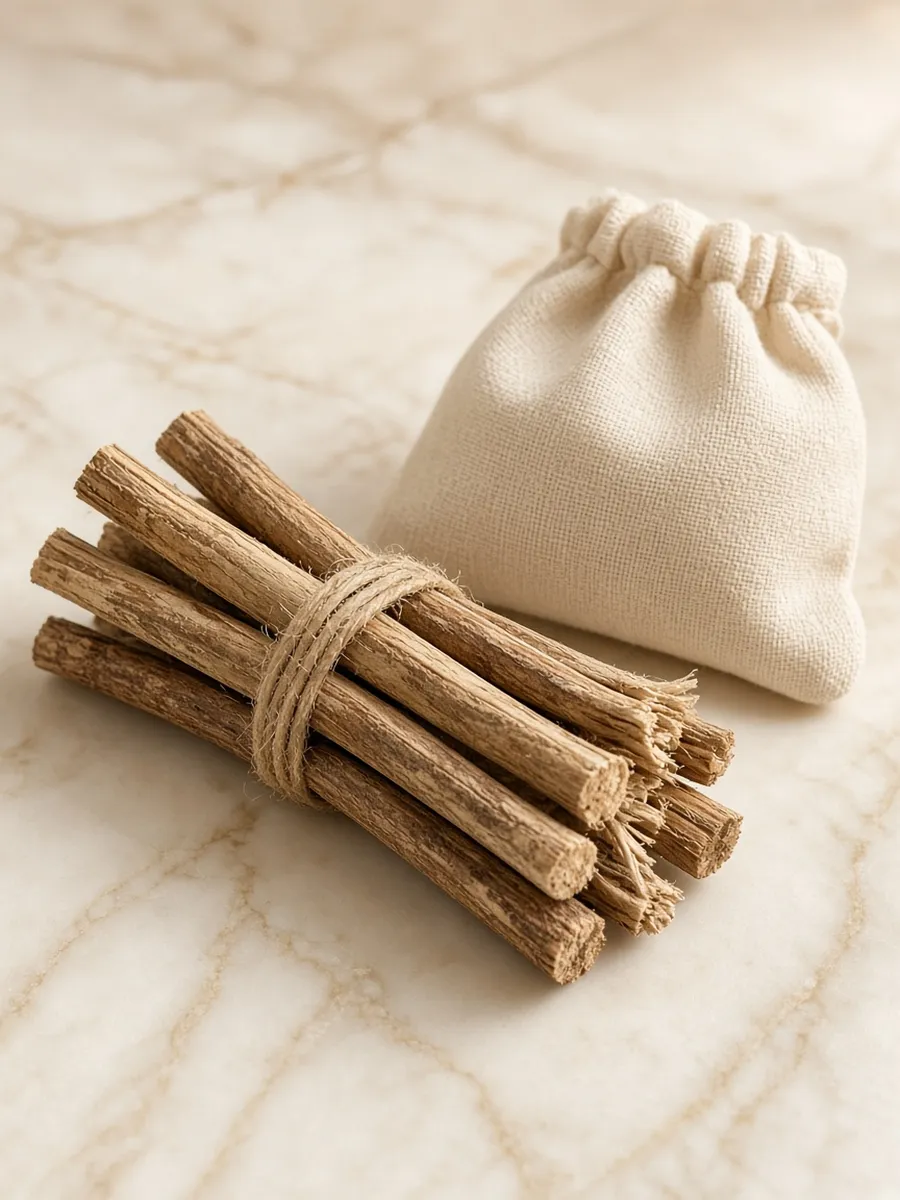
The miswak (also called siwak) is a natural teeth-cleaning twig, traditionally cut from the Peelu tree (Salvadora persica), also known as the Arak tree. People have used it to clean their teeth for centuries, and it holds a special place for Muslims because the Prophet Muhammad ﷺ used it regularly and encouraged its use. This guide explains how to use one properly.
The miswak in the Sunnah
Hadith collections record that the Prophet ﷺ valued the miswak highly and used it often, including before prayer, on waking and on entering his home. For this reason many Muslims keep a miswak with them and use it before wudu or salah. For detailed rulings, please refer to a qualified scholar.
How to prepare a new miswak
- Peel the end. Using your teeth or a small knife, carefully remove about one centimetre of bark from one end.
- Soften the fibres. Chew the peeled end gently until the fibres separate into soft bristles, like a small brush. If the stick feels dry, soak the tip in clean water for a few minutes first.
- Rinse. Rinse the bristles in clean water and it is ready to use.
How to use a miswak
- Hold the miswak between your fingers, with the bristles pointing towards your teeth.
- Brush gently across the teeth and along the gum line, working around the mouth.
- Clean the inner surfaces of the teeth as well as the outer ones.
- Rinse your mouth and the miswak afterwards.
Brush gently; pressing hard is not more effective and can irritate the gums.
Keeping it fresh
- Trim regularly. When the bristles become worn or discoloured, usually every day or two, cut them off and prepare a fresh centimetre.
- Store it dry and covered. Keep it in a clean, ventilated case or holder, away from the sink and bathroom floor.
- Keep spare sticks sealed. Unused sticks stay fresh longer in their original packing, in a cool place.
- One per person. A miswak is personal; do not share it.
Miswak and your toothbrush
Many people use the miswak alongside their regular toothbrush and toothpaste, for example using the miswak before each prayer and brushing in the morning and at night. For any dental concerns, follow the advice of your dentist.
Common questions
How long does a miswak last?
It depends on how often you use it. Most people trim the used bristles every day or two and expose a fresh centimetre. A stick lasts until it becomes too short to hold comfortably, usually a few weeks.
Why is my new miswak so hard?
Dried sticks need softening before first use. Soak the tip in clean water for a few hours, then chew it gently until the fibres separate into bristles.
Should it smell or taste strong?
A fresh peelu (arak) miswak has a natural, slightly sharp and earthy taste. This is normal and usually becomes milder with use.
Can I use it when travelling?
Yes, which is one reason people love it. Keep it in a small case or a clean pouch so the tip stays clean and dry between uses.
When people use the miswak
Many Muslims keep a miswak close by so they can follow the Sunnah through the day: when making wudu, before prayer, when waking up, before reciting the Quran and when entering the home. Because it needs no water or paste, it fits easily into these moments. Keep one in the car, at your desk or by your janamaz.
Storing it correctly
- Keep the stick in a cool, dry place out of direct sunlight.
- Do not leave it soaking in water for long periods; it can become soggy or mouldy.
- Rinse the tip after use and let it air-dry before closing the case.
- Keep unused sticks sealed in their packaging to keep them fresh.
Choosing a miswak
Look for sticks that are fresh, slightly flexible and free of cracks or mould. Sealed packaging helps keep them moist. A multi-pack like our peelu miswak pack lets you keep one at home, one at work and one in the car.
Where to buy
Our Peelu miswak pack is in the Miswak & Bakhoor collection, together with bakhoor and burners for scenting your home. A miswak also makes a meaningful addition to a Ramadan or Hajj gift alongside a tasbih and janamaz.