گائیڈ · 3 نومبر 2026
دبئی عبایہ کے انداز: اس نام کا مطلب اور کیسے چنیں
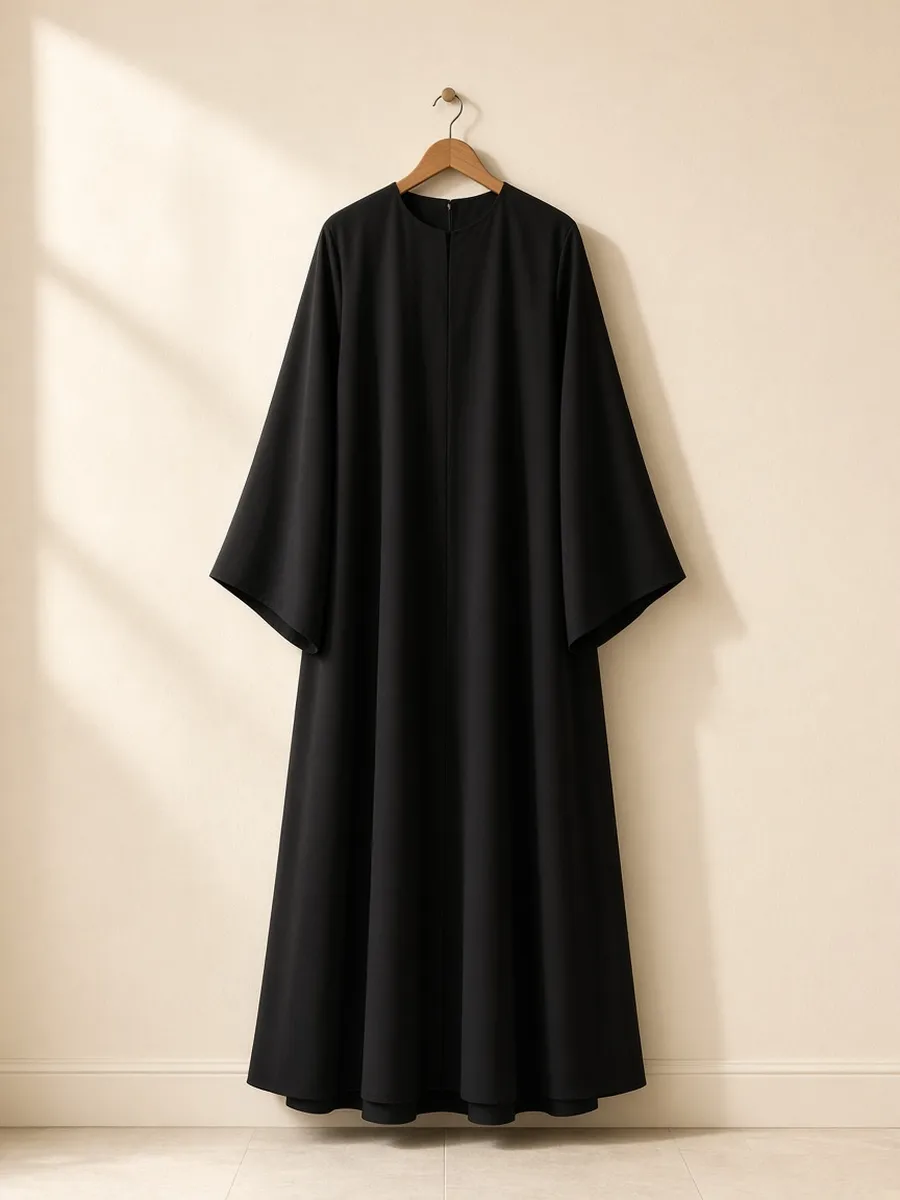
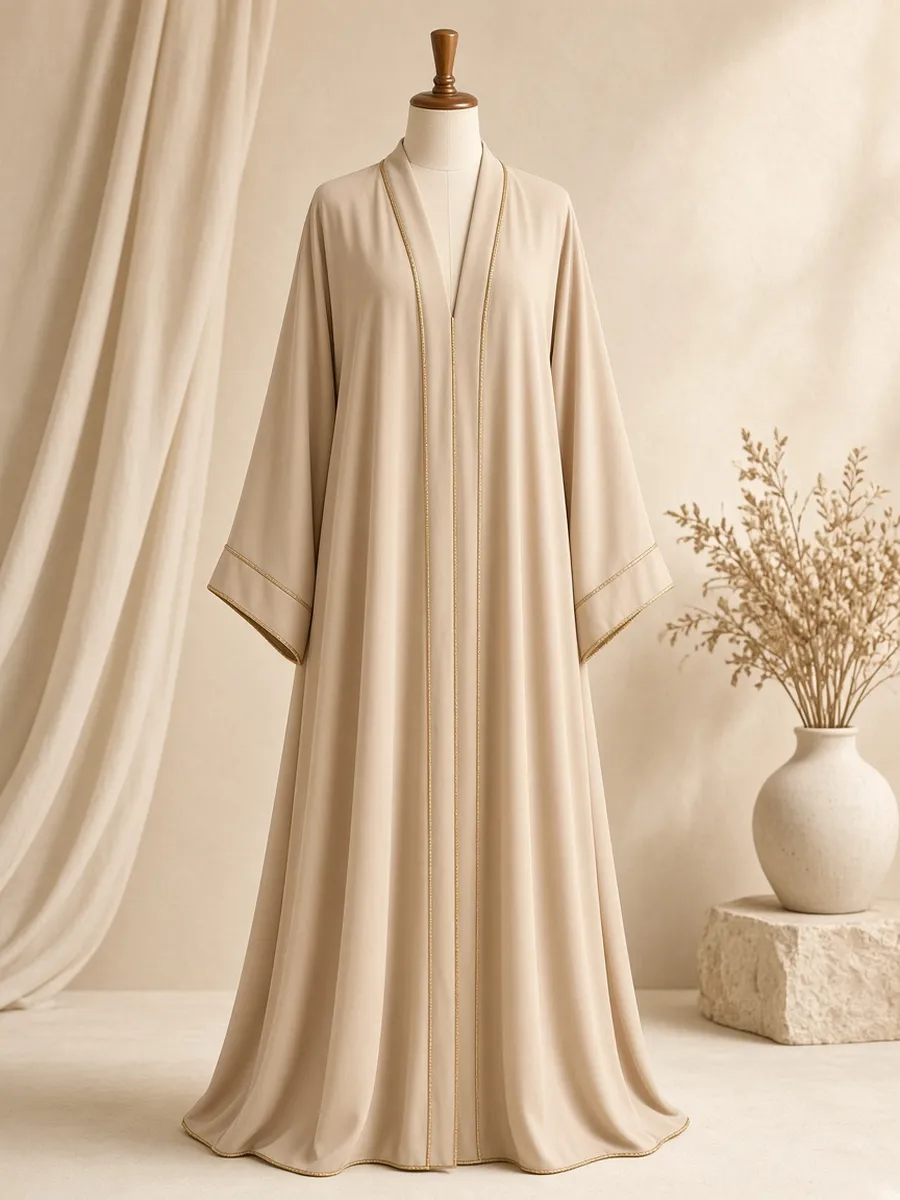
“Dubai abaya” and “abaya Dubai” are among the most searched abaya terms in India. The name usually describes a style associated with the UAE and the wider Gulf, not necessarily where a piece was made. Understanding what defines the style helps you shop with confidence and avoid paying extra for a label alone.
What people mean by “Dubai style”
Abayas popular in the Gulf tend to share a few features:
- Flowing, generous cuts that fall straight from the shoulder.
- Wide or statement sleeves, including bell and butterfly sleeves.
- Refined detailing: piping, lace or embroidered cuffs, crystal or bead work used sparingly.
- Mostly black, though neutral and pastel shades are now common.
- Open-front designs worn over a coordinated inner dress.
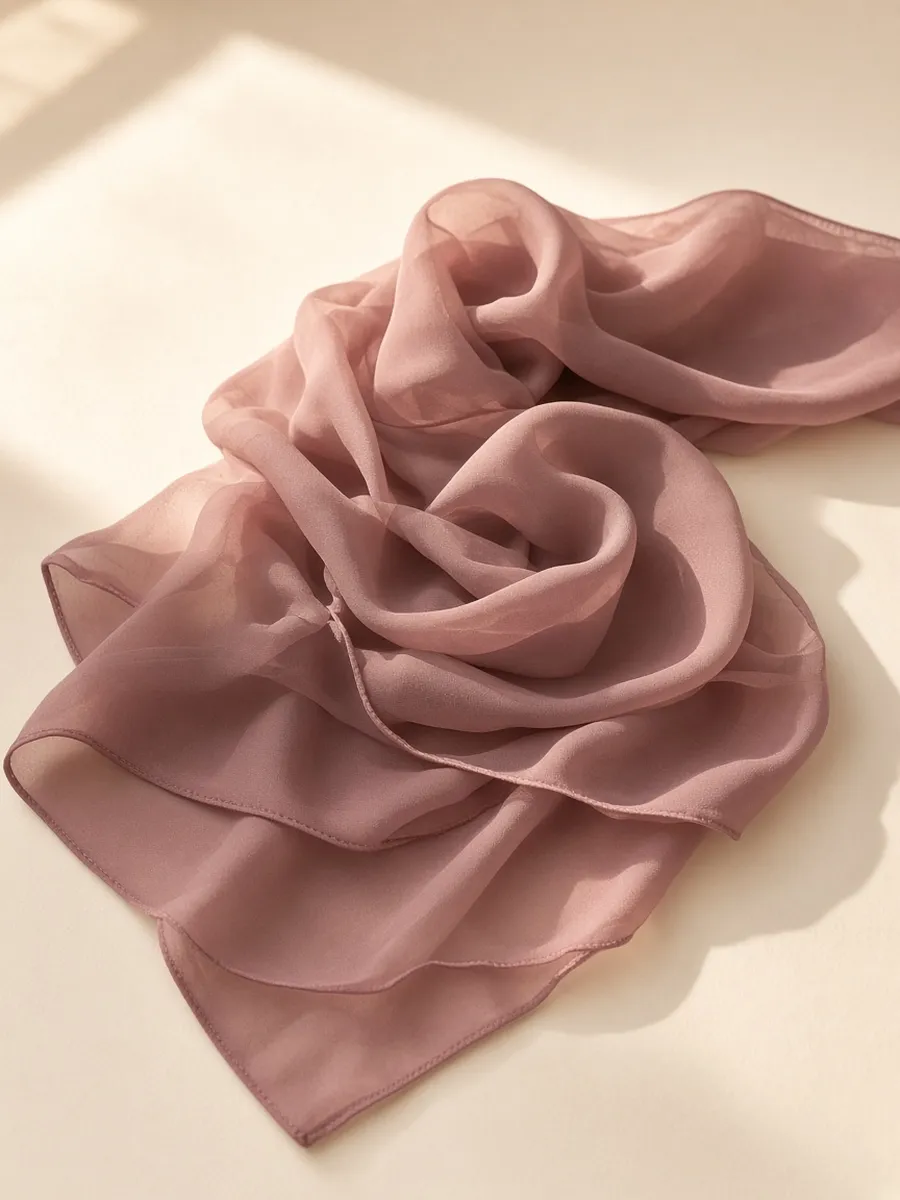
- Matching shaylas: a long rectangular hijab, often made from the same or a complementary fabric.
Is a “Dubai abaya” made in Dubai?
Not necessarily. Many abayas sold under this name are made elsewhere, including in India. If origin matters to you, look for it clearly stated in the product details. At ZARIYA we describe our abayas by their cut and colour, and we do not use “Dubai” as a claim about where a piece comes from.
Popular Gulf-inspired cuts
- Butterfly (farasha): very wide sleeves joined to the body, for evenings and occasions.
- Bisht-style abaya: an open cloak shape with a border along the front, echoing the men’s bisht.
- Kimono or open abaya: straight and open, worn with an inner and often a belt.
- Classic closed abaya: simple and elegant, with detail only at the cuffs.
How to judge quality
- Drape: a good abaya falls smoothly from the shoulders without bunching.
- Opacity: hold it up to the light; it should not be see-through.
- Finishing: look for neat hems, secure buttons or snaps and embellishment that is firmly attached.
- Length: it should reach just above the floor in your usual shoes.
- Care: heavy embellishment usually means hand wash or dry clean only.
Wearing the look in India
Gulf styles are often designed for air-conditioned interiors. In Indian heat, choose lighter, breathable fabrics and keep embellishment for occasions. An open-front abaya over a light inner gives the Gulf silhouette with everyday comfort, while a maroon embroidered abaya brings the festive detailing for Eid and weddings.
Shaylas and the Gulf look
A shayla is a long, rectangular scarf, wrapped loosely around the head and draped over the shoulder. It is the hijab most often seen with Gulf-style abayas. To wear one, place it over an under-cap with one side much longer, pin under the chin or at the side, and wrap the long side around the head and over the shoulder. Lightweight chiffon or satin shaylas give the soft, flowing look the style is known for. See our chiffon hijab and satin hijab, and read the hijab guide for more ways to wear one.
Fabric names you may see
Gulf-style abayas are often described using trade names such as nida, crepe, georgette or chiffon. These names vary between sellers and are not always precise, so treat them as a description of the feel (soft, matte, flowing or sheer) rather than a guarantee of the exact fibre. If the composition matters, look for the actual fibre content, such as polyester, viscose or cotton.
Avoiding common buying mistakes
- Paying for a label. A higher price because of the word “Dubai” does not by itself mean higher quality. Judge the drape, finishing and fabric.
- Too much embellishment for daily use. Heavy stones and beads catch on bags and seatbelts. Keep them for occasions.
- Sleeves that are impractical. Very wide sleeves look beautiful but can be tiring on busy days. Consider where you will wear it most.
- Ignoring length. Gulf styles are often very long; check the measurement against your height.
Caring for embellished abayas
Hand wash or dry clean pieces with stones, beads or lace. Turn them inside out, avoid wringing, and store them folded with tissue between layers so embellishment does not snag other clothes.
Completing a Gulf-inspired outfit
- A long, softly draped hijab such as champagne satin.
- A touch of attar; oud and amber notes are classic in the Gulf.
- Simple gold jewellery and a structured handbag.
See all designs in the abaya collection, and read latest abaya designs for more styles.